Call: 1800 103 6121
Email: help@ustraa.com








Start early for better recovery
Hair Regrowth
Hair Thinning
Dry Scalp
What is Ustraa Hair Growth S.I.P.?
Ustraa Hair Growth S.I.P. is a personalized hair growth routine for men — designed to help control hair fall and support regrowth.
Hair fall in men differs in two ways:
(1) what exactly is damaging the follicles; and
(2) how far the damage has progressed.
The follicle damage may be caused by (a) DHT, (b) reduced blood, oxygen, and nutrient flow, (c) scalp stress, or (d) a mix of these. And the damage may also be at different stages — from early weakening to visible thinning at the hairline or crown. That’s why one generic hair fall solution cannot work for every man.
Therefore the solution has to address both:
(1) what may be damaging your follicles; and
(2) how far that damage has already progressed.
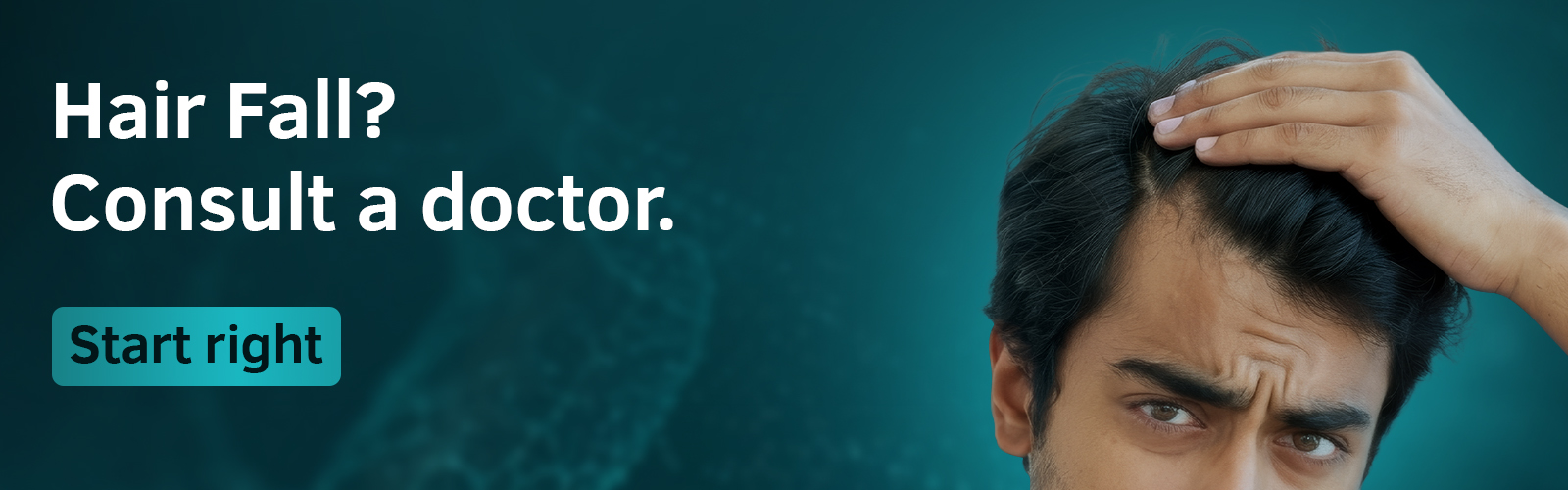
And that’s why Ustraa Hair Growth S.I.P. starts with a doctor’s consultation.
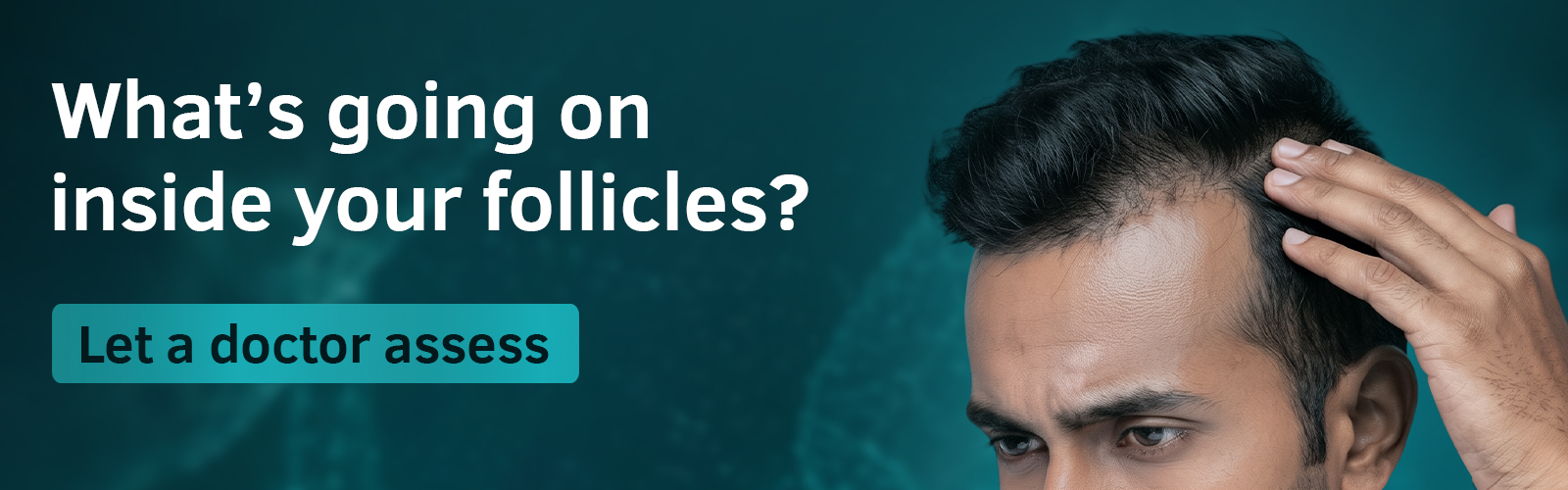
You take the quiz and book a consultation call. A specialised doctor speaks with you in detail to understand what’s happening inside your follicles — which root causes are active and at what stage you are. Based on this, the doctor recommends the right products matched to your condition.
We then build a practical daily routine for you —
- Night Treatment - for deeper follicle repair & stimulation,
- Morning Scalp Care - for proper growth environment, and
- Internal Support, wherever needed.
The idea is simple: Give your follicles the right support, in the right way, every day!
Follow the daily routine consistently, and you can start seeing results in 5–6 months.
Why Early Action on Hair Fall Matters—and How Ustraa Helps
Clinical evidence across the world shows one thing clearly: Early-stage hair fall has a better chance of control and regrowth. Especially when hair fall is still in Stage 1, Stage 2, or Stage 3.
If you start early,
with the right solution,
and stay consistent with the right usage,
you have a good shot!
Allow us to explain why:
Every hair on your head grows from a tiny root called a hair follicle. When a follicle is healthy and full-sized, it does two things well:
- It grows thick hair.
- And it keeps growing that hair for a long time.
That’s why your hair looks dense, long, and strong. But in many men, DHT can slowly damage genetically sensitive follicles. Over time, the follicle starts shrinking. And as the follicle shrinks, two things happen:
- It starts growing thinner hair.
- And it cannot grow hair for long.
So hair becomes thinner. Shorter. And weaker. Now, in the early stages of hair fall — Stage 1, Stage 2, and Stage 3 — most follicles are still there. They are just weak. But not dead. And because they are still active, they can still be supported, strengthened, and protected. That’s why starting early matters. Because weak follicles still have a better chance to recover. But if you keep waiting, hair fall keeps progressing; More follicles keep shrinking. More hair becomes thin. And slowly, thinning can turn into visible bald patches. At this stage, many follicles have shrunk completely. They stop producing hair. And once that happens, bringing them back becomes extremely difficult. That’s why regrowth becomes much harder.
So, start your Ustraa Hair Growth S.I.P. early. When follicles are weak — not dead. And hence, you have a better chance of hair fall control and hair regrowth.
Ustraa Hair Growth S.I.P. starts with a doctor’s consultation. You take the quiz and book a consultation call. A specialised doctor speaks with you in detail to understand what’s happening inside your follicles — which root causes are active and at what stage you are. Based on this, the doctor recommends the right products matched to your condition.
We then build a practical daily routine for you —
- Night Treatment - for deeper follicle repair & stimulation,
- Morning Scalp Care - for proper growth environment, and
- Internal Support, wherever needed.
The idea is simple: Give your follicles the right support, in the right way, every day!
Follow the daily routine consistently, and you can start seeing results in 5–6 months.
How Ustraa Hair Growth S.I.P. Helps You Start Right
“Will I lose my looks before time?” Every guy feels this when hair fall starts.
And it doesn’t feel right. So he tries everything.
Advice.
Products.
Experts.
Hoping his hair fall will stop. Instead, he finds noise, overpromises, and zero clarity. He gets mixed results.Or no results. Because either solution wasn’t right.
Or the solution was right — but the usage consistency wasn’t.
Or he started too late.
And then he starts wondering - Will anything actually work?
This is where Ustraa Hair Growth S.I.P. comes in. Because hair growth doesn’t need random trials. It needs the right start. And then consistent use.
Ustraa Hair Growth S.I.P. helps you start right.
Hair fall in men is driven by multiple biological causes — and these causes differ from one man to another. That is why we start with a doctor’s consultation.
You take the quiz and book a consultation call. A specialised doctor speaks with you in detail to understand what’s happening inside your follicles — which root causes are active and at what stage you are. Based on this, the doctor recommends the right products matched to your condition.
We then build a practical daily routine for you —
- Night Treatment - for deeper follicle repair & stimulation,
- Morning Scalp Care - for proper growth environment, and
- Internal Support, wherever needed.
The idea is simple: give your follicles the right support, in the right way, every day.
So start your Ustraa Hair Growth SIP now and follow the daily routine consistently. And you can start seeing results in 5–6 months.
Why Staying Consistent with Ustraa Hair Growth S.I.P. Matters
You’re facing hair fall. Your hairline may be receding. Your crown may be thinning.
You may be in the early stages — Stage 2 or Stage 3. So, to control hair fall and regrow hair, you’ve started your hair growth plan.
Now the biggest question is: How long do I need to use it before I see results? And more importantly —What happens if I stop?
Both questions come down to one thing: consistency;
Because hair thinning builds up slowly over time.
And regrowth also happens slowly, through the body’s natural hair growth cycle.
That’s why, with Ustraa Hair Growth S.I.P., the rule is simple: Stay tight.
Stay tight means:
Follow your hair growth plan every day.
Without gaps. Without stopping midway.
Because hair growth follows its natural biological cycle — and that cycle takes time.
Allow us to explain why.
Hair fall is not a one-time event.
It is a daily biological process.
DHT can keep shrinking genetically sensitive follicles.
Lifestyle stress, poor sleep, poor nutrition, dandruff and scalp stress can further weaken the environment your follicles need for growth.
So if the pressure is daily, the support also has to be daily.
Ustraa Hair Growth S.I.P. gives your follicles that daily support.
The night treatment works on the deeper causes troubling your follicles.
The morning scalp care keeps your scalp calm, stable, and supportive for growth.
And wherever needed, internal support gives your body key nutrients required for stronger hair.
Together, these steps work in sync.
But only when you use them consistently.
Now let’s understand the timeline of hair regrowth. Hair regrowth usually happens in three stages.
First is the recovery stage — the first 1 to 2 months.
In this stage, your routine starts supporting weak follicles. The goal is to reduce the daily pressure on your follicles, improve the scalp environment, and help weak follicles become more stable.
Your hair fall may start stabilising.
Your scalp may start feeling calmer.
And your follicles begin getting the support they need to stay active.
But visible regrowth may not be clear yet. Because in the first stage, most of the work is happening beneath the surface.
Second is the growth stage — around the third or fourth month.
Once follicles become active, they start producing hair at the natural growth rate — about one to one and a half centimetres per month.
With daily use, more follicles can stay in the growth phase for longer.
That is when early regrowth may start becoming visible.
Third is the density stage — around the fifth or sixth month.
By this time, with consistent daily use, more follicles can stay active for longer.
As more follicles remain active and healthy, hair strands gradually become thicker.
And hence, overall hair density improves.
So visible results take time because hair regrowth happens stage by stage — first recovery, then growth, then density.
That is why staying consistent for 5–6 months matters.
That’s why our recommendation is simple:
Don’t start and stop.
Don’t use it for a few weeks and give up.
Don’t wait for magic in one month.
Stay tight.
Follow your Ustraa Hair Growth S.I.P. every day
Because healthy hair regrowth needs two things:
the right routine,
and the discipline to stay with it.
Ustraa Hair Growth S.I.P.
Start early. Start right. Stay tight.
Causes of Hair Fall in Men, Part 1: DHT and Male Pattern Baldness
When men start noticing a receding hairline, thinning temples or thinning at the crown, the most common pattern is usually male pattern baldness, medically known as androgenetic alopecia.
One of the main biological factors behind male pattern hair loss is sensitivity to DHT.
In this section, we answer three important questions:
- How does DHT cause hair loss?
- Why are some hair follicles more sensitive to DHT?
- How does gradual follicle damage become visible baldness?
How Healthy Hair Follicles Work
Every hair on your scalp grows from a hair follicle.
When a follicle is healthy and full-sized, it does two things well:
- It produces thick, strong hair.
- It keeps the hair growing for a longer period.
This is what helps your hair look dense, long and healthy.
What Is DHT?
DHT, or dihydrotestosterone, is a hormone naturally produced in the body.
An enzyme called 5-alpha reductase converts testosterone into DHT. DHT is present around hair follicles in the scalp and is not harmful to every follicle.
The problem begins when a person’s hair follicles are genetically sensitive to DHT.
How Does DHT Cause Hair Loss?
When DHT binds to androgen receptors inside genetically sensitive hair follicles, it can gradually shorten the hair-growth phase and trigger a process called follicle miniaturisation.
As this process continues over successive hair-growth cycles:
- The follicle starts producing thinner and weaker hair.
- The hair does not grow as long as it did earlier.
- The follicle gradually becomes smaller.
- The new hair may become so fine and short that it is barely visible on the scalp.
Over time, when a large number of follicles become miniaturised, visible signs of male pattern hair loss begin to appear.
These commonly include:
- A receding hairline
- Thinning at the temples
- Reduced density at the crown
- Gradually expanding bald areas
Why Does Hair Loss Become Visible Slowly?
DHT exposure is ongoing, but visible thinning usually develops gradually over repeated hair-growth cycles.
This is why male pattern baldness may progress slowly over several years. The follicles do not disappear overnight. They generally become weaker, smaller and less productive over time.
This gradual process creates an important window to act.
During the early stages of hair fall, many follicles may still be active. They may be producing thinner or weaker hair, but they may not yet be deeply miniaturised.
That is why early action matters.
The earlier you begin supporting your follicles with the right hair fall routine, the better your chance of slowing further hair loss, protecting existing hair and improving the appearance of hair density over time.
However, once clearly visible bald patches appear, a larger number of follicles may already be deeply miniaturised, which can make visible recovery more difficult.
Start Early with Ustraa Hair Growth S.I.P.
Do not wait for hair fall to progress into visible bald patches.
Ustraa Hair Growth S.I.P. helps you start with a doctor-guided hair fall plan suited to your condition and stage of hair loss.
Your recommended routine may include three daily areas of support:
- Night hair fall treatment
- Morning scalp and follicle care
- Internal nutritional support
Starting early is only the first step. To give your routine a fair chance to work, it must also be followed correctly and consistently over the long term.
Start Early. Start Right. Stay Tight.
Causes of Hair Fall in Men, Part 2: Lifestyle Stress, Nutrition and Hair Shedding
In Part 1 of this series on the common causes of hair fall in men, we explained how DHT can gradually miniaturise genetically sensitive hair follicles, leading to male pattern baldness or androgenetic alopecia.
DHT-related hair loss is the most common cause of progressive hair thinning in men. However, lifestyle, nutritional and health-related stressors can increase shedding, weaken hair growth and make existing thinning appear more noticeable.
These stressors may include:
- Chronic physical or emotional stress
- Poor or insufficient sleep
- Crash dieting or rapid weight loss
- Low protein or inadequate calorie intake
- Iron, vitamin or mineral deficiencies
- Smoking
- Illness, surgery or prolonged physical strain
These factors do not usually cause male pattern baldness by themselves. However, they can disturb the normal hair-growth cycle and reduce the support available for healthy hair production.
How Hair Follicles Receive Nutrients
Every hair grows from a hair follicle.
At the base of the follicle are the hair bulb and dermal papilla, where new hair cells are formed. This area is surrounded by tiny blood vessels that supply the follicle with:
- Oxygen
- Amino acids from protein
- Vitamins
- Minerals
- Energy and other nutrients required for hair growth
Hair production involves rapid cell activity. For this reason, follicles depend on a steady supply of nutrients and a healthy internal environment.
How the Hair-Growth Cycle Works
Each hair follicle moves through a natural cycle that includes:
- A growth phase
- A transition phase
- A resting phase
- A shedding phase
The active growth phase can last for several years.
When a follicle remains in this phase for longer, the hair has more time to grow thick and long. When most follicles remain in the growth phase, the scalp generally appears fuller and denser.
How Lifestyle Stressors Can Increase Hair Fall
Lifestyle, nutritional and health-related stressors can disturb the normal hair-growth cycle.
For example, severe stress, illness, rapid weight loss, crash dieting or nutritional deficiency may push a larger number of follicles out of the growth phase and into the resting phase earlier than usual.
As a result:
- More hairs may begin shedding around the same time.
- New hair may grow more slowly.
- Hair may appear thinner or less dense.
- Nutritional deficiencies may affect the strength and quality of newly produced hair.
- Existing male pattern hair loss may become more noticeable.
This type of increased shedding is often different from DHT-led follicle miniaturisation.
DHT gradually makes genetically sensitive follicles smaller over successive hair-growth cycles. Lifestyle or health-related stressors, on the other hand, may temporarily disrupt the growth cycle and cause more follicles to shed.
Both processes can also happen together.
Why Hair Fall May Appear Worse When DHT and Lifestyle Stressors Combine
A man may already have follicles that are genetically sensitive to DHT.
If poor nutrition, illness, severe stress, rapid weight loss or another physical stressor increases shedding at the same time, the overall reduction in hair density may become visible more quickly.
This does not necessarily mean that lifestyle stress has permanently destroyed the follicles. However, it may reduce the follicle’s ability to produce and retain healthy hair during that period.
That is why managing both genetic hair loss and lifestyle-related stressors is important.
Start Early with Ustraa Hair Growth S.I.P.
Do not wait for hair fall to progress into clearly visible thinning or bald patches.
Ustraa Hair Growth S.I.P. helps you start with a doctor-guided hair fall plan suited to your condition, lifestyle and stage of hair loss.
Your recommended routine may include three areas of support:
- Night hair fall treatment
- Morning scalp and follicle care
- Internal nutritional support
The doctor may also help identify whether factors such as stress, poor nutrition, rapid weight loss, illness or inadequate protein intake could be contributing to your hair fall.
Starting early is important. Following the right routine consistently over time is equally important.
Start Early. Start Right. Stay Tight.
Causes of Hair Fall in Men, Part 3: Dandruff, Scalp Irritation and Inflammation
In the first two parts of this series on the common causes of hair fall in men, we explained:
- How DHT gradually miniaturises genetically sensitive hair follicles.
- How lifestyle, nutritional and health-related stressors can disturb the hair-growth cycle and increase shedding.
Now, let us understand another factor that can affect your hair and scalp: scalp stress.
Scalp stress is not a medical diagnosis. It is a simple way of describing scalp conditions and symptoms such as:
- Dandruff and flaking
- Persistent itching
- Redness or irritation
- An excessively oily or dry scalp
- Scalp pimples or folliculitis
- Product-related irritation
- Frequent scratching
These conditions do not usually cause male pattern baldness by themselves. However, an irritated or inflamed scalp can increase discomfort, contribute to hair breakage or shedding and make existing hair thinning appear more noticeable.
Why a Healthy Scalp Environment Matters
Every hair follicle sits within the skin of your scalp.
The visible surface of the scalp is protected by a skin barrier made up of skin cells and natural lipids. This barrier helps:
- Retain moisture
- Protect the scalp from irritants
- Maintain a balanced scalp environment
- Reduce excessive sensitivity and inflammation
- Support the strength and condition of the emerging hair shaft
When the scalp barrier is healthy, the scalp is generally calmer, less reactive and better able to tolerate regular cleansing and hair-care products.
However, conditions such as dandruff and scalp seborrheic dermatitis are associated with flaking, itching, changes in the scalp microbiome, inflammation and disruption of the scalp barrier.
How Dandruff and Scalp Irritation Affect the Scalp
Dandruff is commonly associated with increased flaking and itching.
A more inflammatory form, known as scalp seborrheic dermatitis, may also cause:
- Redness
- Greasy or dry-looking scales
- Persistent itching
- Irritated or sensitive areas
- Repeated flare-ups
Seborrheic dermatitis is a chronic, recurring inflammatory scalp condition influenced by factors such as scalp oils, the skin microbiome, individual susceptibility, immune responses and skin-barrier dysfunction.
These changes can affect the scalp in three important ways.
1. Disruption of the Scalp Barrier
The scalp barrier acts as the protective outer layer of the scalp.
When this barrier becomes disturbed, the scalp may lose moisture more easily and become more sensitive to sweat, pollution, harsh cleansers, fragrances or other irritants.
This can create a cycle of:
- Dryness or dehydration
- Flaking
- Sensitivity
- Itching
- Further irritation
A scalp can also feel oily while still having a disturbed skin barrier. Excess oil does not necessarily mean that the scalp is adequately hydrated.
2. Inflammation and Itching
When the scalp is irritated, inflammatory signals are released within the skin.
This can cause itching, redness, burning or discomfort. Persistent inflammation may make the environment around the upper part of the follicle less stable and may worsen the symptoms of an existing scalp condition.
However, dandruff or mild scalp irritation should not be confused with DHT-led follicle miniaturisation.
Male pattern baldness is primarily characterised by the gradual miniaturisation of genetically susceptible hair follicles. Dandruff and seborrheic dermatitis are separate scalp conditions, although both can occur in the same person.
3. Scratching, Hair Breakage and Shedding
An itchy scalp often leads to repeated rubbing or scratching.
Frequent scratching can:
- Damage the scalp surface
- Increase redness and irritation
- Weaken or break hair shafts
- Loosen hairs that are already in the shedding phase
- Create small wounds that may become infected
Therefore, dandruff may not directly create male pattern baldness, but severe itching and repeated scratching can increase visible hair breakage or hair loss in affected areas.
How Scalp Stress and Male Pattern Hair Loss Can Occur Together
A man may already have genetically DHT-sensitive follicles that are gradually becoming smaller.
At the same time, he may also experience dandruff, itching, scalp irritation or excessive scratching.
When these problems occur together:
- DHT may continue to miniaturise susceptible follicles.
- Lifestyle or health-related stressors may increase shedding.
- Scalp inflammation and scratching may increase irritation and hair breakage.
- The combined effect may make thinning appear more noticeable.
This does not mean that every itchy or flaky scalp is causing permanent hair loss. It means that scalp conditions should not be ignored, especially when hair fall is also present.
When Should You Consult a Doctor?
You should speak with a doctor if you have persistent or severe:
- Dandruff that does not improve
- Scalp redness or burning
- Painful scalp pimples
- Pus, crusting or open wounds
- Thick or firmly attached scales
- Sudden or excessive shedding
- Clearly defined bald patches
- Hair loss accompanied by significant itching
Different scalp conditions can produce similar symptoms. Dandruff, seborrheic dermatitis, psoriasis, fungal infections, allergic reactions and folliculitis may require different forms of treatment. Correct diagnosis is therefore important.
Start Early with Ustraa Hair Growth S.I.P.
Do not wait for hair fall or scalp problems to become severe.
Ustraa Hair Growth S.I.P. begins with a doctor consultation to understand your:
- Stage and pattern of hair fall
- Dandruff condition
- Scalp condition
- Lifestyle-related stressors
Based on your condition, the doctor recommends a personalised hair fall plan that may include:
- Night hair fall treatment
- Morning scalp and follicle care
- Internal nutritional support
Starting early helps you act while more follicles may still be active. Starting right helps ensure that your routine is suited to your hair fall and scalp condition. Staying consistent gives the recommended routine a fair chance to work over time.
Start Early. Start Right. Stay Tight.

Ustraa is a range of grooming products, for men. Helping our Bros look their best since 2015
Order Related Enquiries:
Email: help@ustraa.com
Call: 1800 103 6121


© 2026 Happily Unmarried Marketing Pvt. Ltd,
a wholly owned subsidiary of VLCC Limited (formerly known as VLCC Health Care Limited). All Rights Reserved CIN/LLPIN: U51909DL2007PTC167121